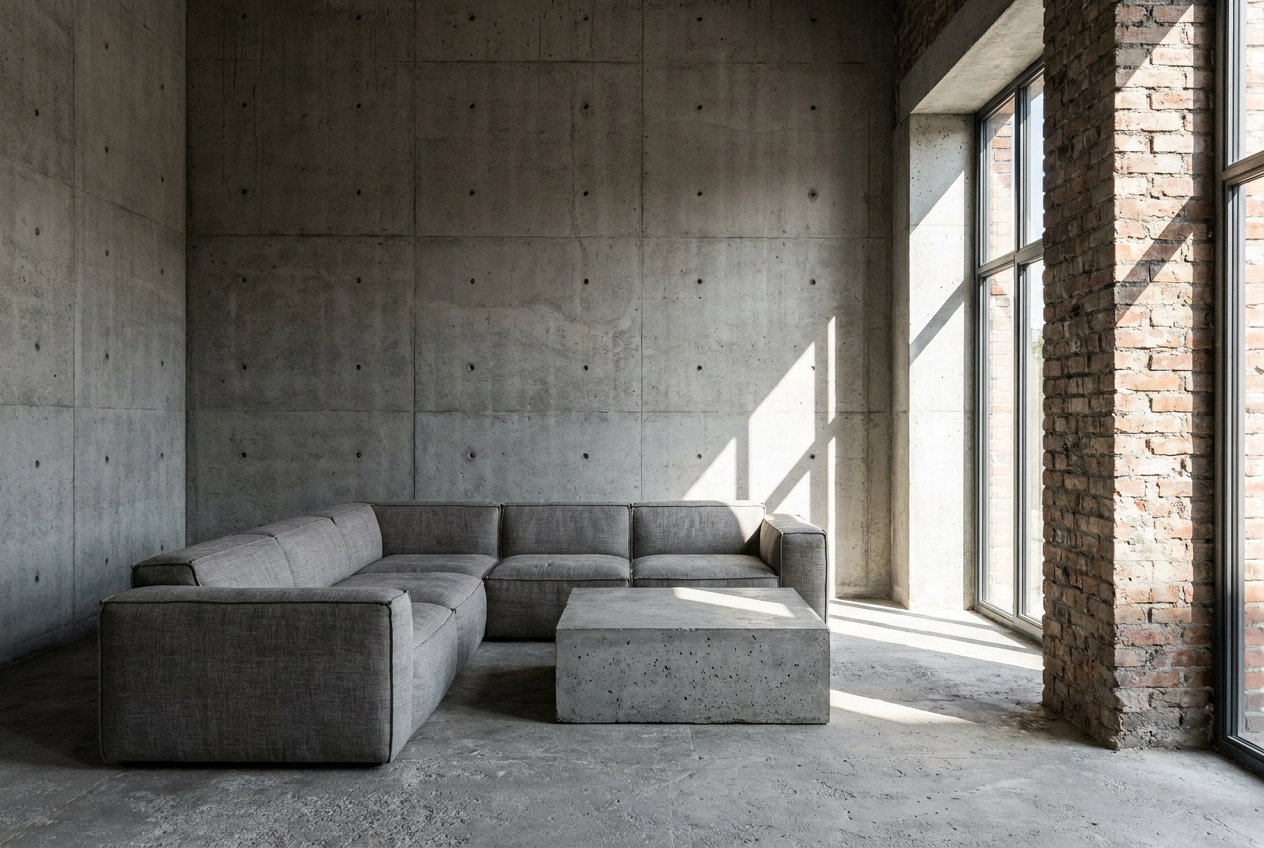
Brutalism emerged in the 1950s in Europe within post-war modernism. The name comes from the French term béton brut (raw concrete). The style relies on exposing raw building materials, structural elements, and utilitarian functions without plaster or applied ornamentation, using bold geometric forms.
Advantages
+Raw concrete and exposed brick do not require repainting and tolerate heavy wear.
+Massive concrete structures provide high thermal inertia, helping retain coolness indoors in hot climates like Tashkent.
+Exposed structural elements and utilities provide direct access for maintenance without breaking walls.
Disadvantages
−Monolithic concrete is difficult to alter or reconfigure once cast, requiring heavy specialized machinery for routing or demolition.
−Uncovered hard surfaces reflect sound, creating high reverberation that requires added acoustic panels or heavy textiles.
−Achieving acceptable surface finish on raw cast concrete demands expensive formwork and skilled labor.
Where it is built today
United Kingdom
France
Japan
Brazil
Switzerland
In short
Tell the designer: "I want raw exposed concrete and unplastered brickwork, deep window recesses, and built-in concrete furniture."
Reference
02/ 04Style
27/07/2026
Moroccan style
Where it comes from
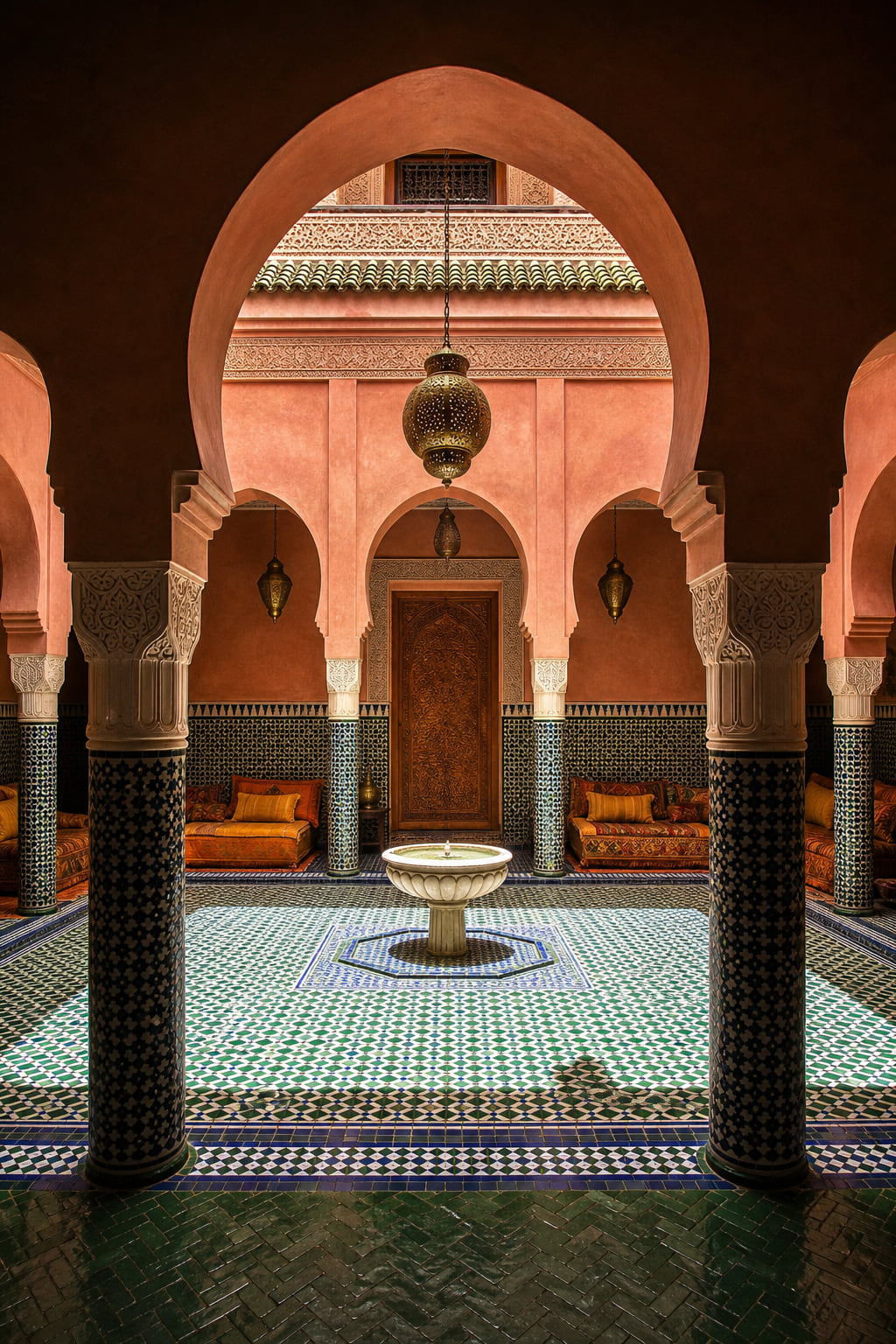
Centuries of Amazigh, Arab and Andalusian craft, layered in the Maghreb. Two techniques carry it: zellij, hand-cut glazed tile known in the western Islamic world since about the 10th–11th centuries and at its height under the Marinids in the 14th; and tadelakt, a lime plaster polished with stone and sealed with olive-oil soap — the traditional lining of Moroccan hammams.
Palette
Espresso
01 / 2C1104
Terracotta
02 / 9B4A24
Olive grey
03 / 646454
Apricot
04 / F39B74
Sage
05 / ACC3B4
Advantages
+The house turns onto a courtyard rather than the street — the same reasoning as a Tashkent hovli, and it keeps the heat and the dust out.
+Tadelakt is genuinely waterproof and seamless: a bathroom with no tile joint left to fail.
+The pattern does the decorating, so a small room needs very little furniture.
Disadvantages
−Zellij is cut by hand; in Fez the apprenticeship runs about ten years. The price and the lead time follow from that.
−Tadelakt has to be re-sealed with soap from time to time. It is a surface you maintain, not one you install once.
−Dense geometry crushes a low ceiling, and used everywhere at once it reads as a restaurant.
Where it is built today
Morocco
Algeria
Tunisia
Spain
France
In short
Don't ask for "cosy" — ask for materials: tadelakt in the wet rooms, one wall in zellij, plain lime plaster on everything else. That is the set that survives a real budget.
Reference
03/ 04Style
26/07/2026
Japandi
Where it comes from
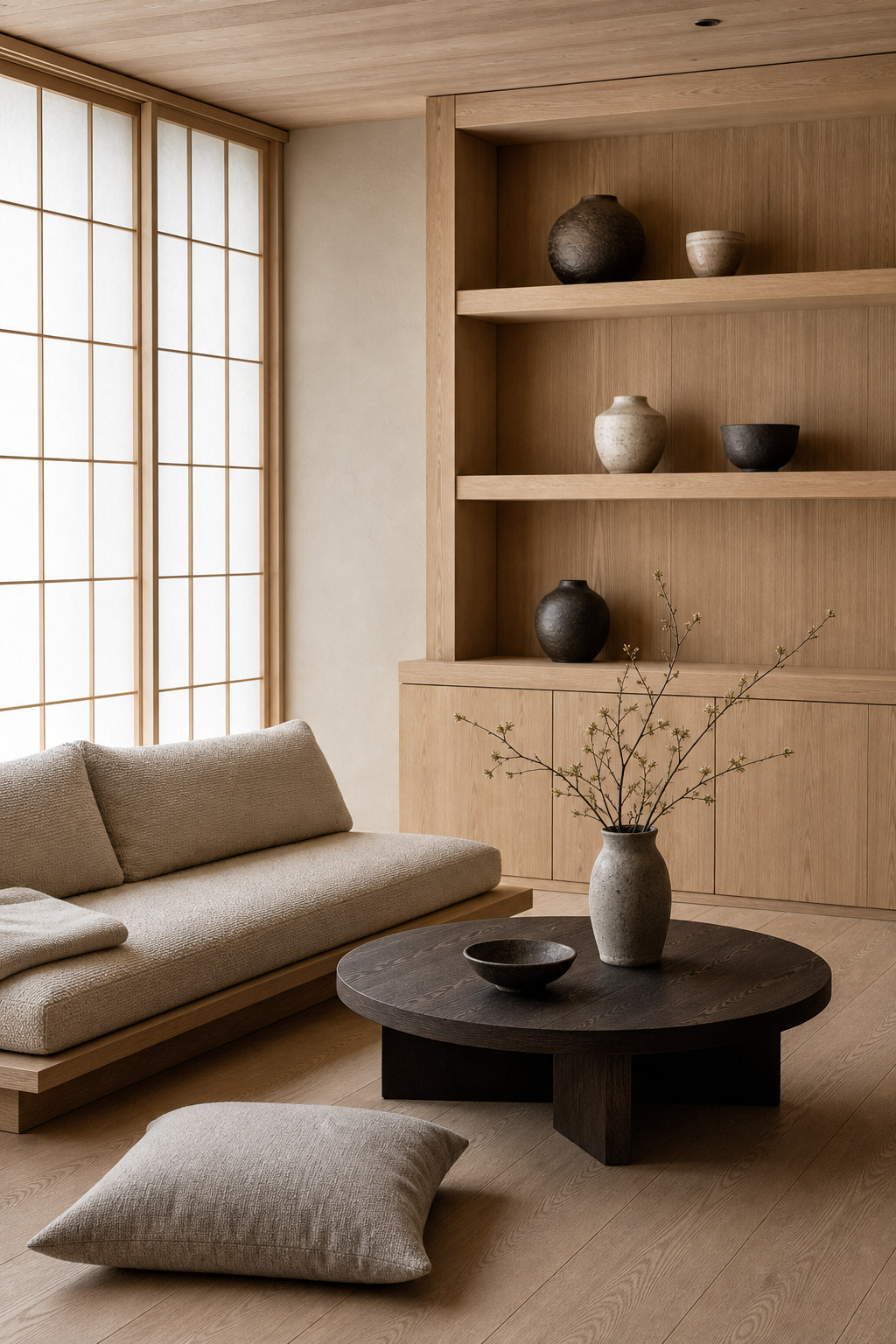
The youngest thing on this page: the word appeared around 2016, though Japanese and Nordic designers had been borrowing from each other for decades. It sets wabi-sabi — beauty in the imperfect and the impermanent, out of the tea ceremony and Zen — against Scandinavian functionalism: low furniture, paper and bamboo, off-white walls, wool.
Palette
Espresso
01 / 231205
Tobacco
02 / 644B34
Clay
03 / 957254
Sand
04 / C4A383
Oat
05 / D4C9BE
Advantages
+Restraint is the entire method, so it costs discipline rather than money.
+Built for a small flat: a low sightline and storage that hides everything.
+A muted palette of real materials ages instead of dating.
Disadvantages
−It is a look, not a tradition: there is no rulebook, and it collapses easily into a beige shopping list.
−It works only while the room is empty. One week of ordinary life takes it apart.
−Pale oak, linen and off-white plaster hold every stain, and in a north-facing room the low contrast reads as cold.
Where it is built today
Denmark
Sweden
Netherlands
Australia
United States
In short
The useful thing to take is a rule, not a palette: fewer materials, more surface for each. Say “oak, lime plaster, linen — nothing else” and you have briefed the whole room.
Reference
04/ 04Style
25/07/2026
Mid-century modern
Where it comes from
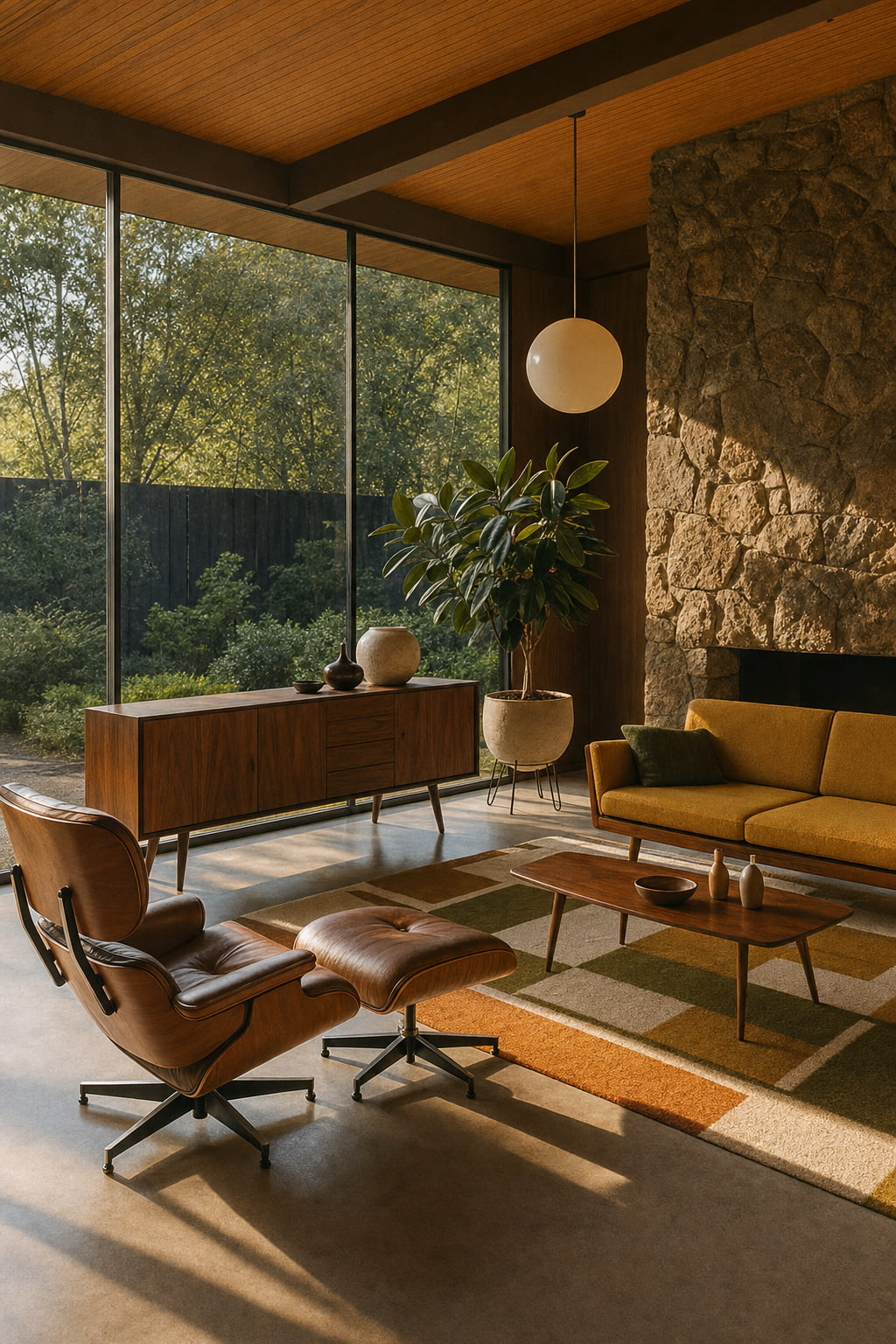
Post-war, roughly 1945 to 1970 — North America, Brazil and Europe, with much of the furniture Scandinavian. The name came later: Cara Greenberg's 1984 book fixed it as a movement. Arts & Architecture's Case Study House programme, announced in January 1945, built the Los Angeles version — glass walls, flat roofs, one open room.
Palette
Bitter chocolate
01 / 2C1C0B
Walnut
02 / 5A4532
Clay
03 / 947C63
Amber
04 / CB7A2C
Wheat
05 / DCBB93
Advantages
+Drawn for small post-war houses: compact, and up on legs, so the floor stays visible and the room stays large.
+Open plan and full-height glazing — what most people actually mean when they say “modern”.
+Sixty years of production: originals, reissues and cheap copies exist at every budget.
Disadvantages
−The original houses are thermally poor: Mies van der Rohe's Farnsworth House is famously hard to heat or cool, and single glazing is fixed only with money.
−Original furniture is collector-priced, and its foam, rubber and glue have aged out.
−Reproduced so widely that it has become the default look of a rented flat.
Where it is built today
United States
Brazil
Denmark
Sweden
United Kingdom
In short
The safest style to ask for and the easiest to get wrong. Buy few pieces and buy them properly — it lives in the proportion and in the legs, and neither survives a room full of copies.
A short reading of one style, term or standard — so you arrive with a name for what you want instead of “something brighter”.
Tell us about the project
Message us on Telegram — we reply within the working day. For an estimate we need the area, the address, and a few words about the brief.
 Visualisation